Corked is a mockumentary based in Sonoma County, California. It follows the lives of several winemakers of different backgrounds: the large corporate winery, the established winery with new ownership, the one-man winery, and the marketing duo based in San Francisco. All are trying to make the best wine possible in order to win Sonoma County’s “Golden Harvest Award” and each run into their own specific problems on the road to wine greatness.
The film’s terroir is primarily Sonoma County, although the viewer is able to see different aspects of vineyards in the county, and also exposure to the difficulties in growing there. One of the vineyard managers creates a giant sound system to scare wildlife away with a jaguar call, and openly complains about people from the nearby casino having relations in his vineyard – an absurd scene, but it does highlight some of the issues a winery in California can face. I also wouldn’t be surprised, with California’s history of innovation, if the loud speaker technique hasn’t been attempted at some point.
I liked that the movie focused pretty closely on certain aspects of the winemaking process that may not get attention in other movies. One example was the display of picking the grapes for the harvest. The other wine films I have watched glossed over the physical picking of the grapes. Corked specifically focused on the aspect by introducing the Iowa tourist couple who wanted to experience true wine country. Expecting the Disney World version of wine, they agreed to join the migrant workers for a day to help pick grapes. It was pretty predictable that they left halfway through the day’s picking because they were hot and sweaty, but I liked that the scene did show how difficult the work of harvesting grapes was, and how fast the migrant workers could pick.
Another aspect that was spoofed was the spraying of sulfites on the grapes. In the other movies I have seen, and even the books I have read, the topic of sulfites has not really come up. In this movie, it became front and center when the young hotshot owner and his beau got caught in the fields while the sulfites were being sprayed.
I liked how disparate the different winemakers were from each other, and how the movie was then able to spoof many different aspects of wine culture. The corporate winery probably got the best knocks, between the stiff winery manager who liked cats and the covering up of a body found in one of the wine vats. The marketing duo showed how little someone could know about wine and still attempt to make money off of it – “Shizzle Creek” was an attempt to sell wine to inner city African Americans. The two other wineries showed more of the real-life aspects of working the vineyards in California. One had a redneck in charge of the grapes, most often seen drinking a beer, even in the middle of the wine award ceremony. The other had one man in charge of everything, from growing to winemaking to bottling. I think this character captured the passion that some people have for wine; truly, their entire lives are dedicated to the life cycle of grapes and wine. His wife was seen angrily leaving come harvest time, and he proclaimed at the end of the movie that he might need to actually hire an employee.
Wine knowledge from class helped me to understand some of the jokes. The character of Richard Parsons, the snobby wine critic with strict tasting rules, was pretty funny. But knowing that the character was likely based on real life critic Robert Parker made the satire really hit home. The scene of Parsons almost literally being mauled outside his hotel room so that he would get a taste of a wine shows how much influence the wine critic can have on the success or failure of a winery. Other wine facts from class helped in the scenes with the wine marketers – much of what they said was completely incorrect, but if I didn’t have the wine background I may not have realized the stupidity of their statements. I specifically liked how they focused on the label that would adorn the bottles more than the actual contents of the wine – they didn’t question why a valued winery would give away a selection of grapes for next to nothing.
I would definitely recommend Corked to a wine audience. The movie was just downright funny and it highlighted the best and worst parts of wine culture. Unlike Bottle Shock, the movie was obvious in its spoofing of California wine, and its humor was much closer in line with my own. I think the reason I liked Corked so much is that most of the hilarity didn’t seem too far off from the reality of Sonoma County wineries.
Wednesday, April 3, 2013
Friday, March 29, 2013
Tasting - Emeri de Bortoli Sparkling Shiraz
Name: Emeri de Bortoli Sparkling Shiraz
Variety: Shiraz
Region: South Eastern Australia
Country: Australia
Year: NV
Price: $9.95
Review: A relatively light, fresh style of sparkling Shiraz, with berries and hints of chocolate picking up just a touch of sweet vanilla on the finish.
My Review: The wine smelled like grapes or Concord grape jelly. I thought the taste was very nice, but the sparkling part of the wine was just strange. It wasn't bad, necessarily, but the bubbles were just not expected for that heavy of a wine. It did have a good aftertaste.
Food? I did not have this wine with food.
Tasting - Tres Ojos Garnacha
Name: Tres Ojos Garnacha
Variety: Garnacha
Region: Calatayud
Country: Spain
Year: 2011
Price: $6.95
Review: The wine has a brick red color with a bouquet of red raspberries, spice and white pepper. The palate is incredibly concentrated and rich. The modern styles of Garnacha in Spain are continuously being perceived worldwide as wines of extraordinarily good quality. This wine is fruity, juicy and shows a great depth, ripe tannins, length but yet with wonderful elegance and lightness. Enjoy with sausages, roasted meats, aged cheeses etc.
My Review: I thought this wine had a very fruity aroma, although I didn't detect anything specific. It tasted pretty spicy to me, but it had an overall smooth finish and seemed very well balanced. Definitely a drinkable red wine, much better than the previous wine tasted (the Montebuena).
Food? I did not have this wine with food.
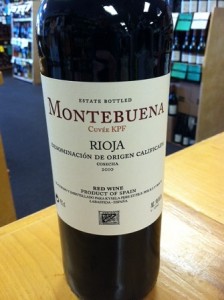
Tasting - Montebuena
Variety: Tempranillo
Region: Rioja
Country: Spain
Year: 2010
Price: $8.95
Review: Ripe cherry and blackcurrant on the nose and in the mouth. Pliant and seamless in texture, with good heft and back-end energy. Finishes smooth and sweet, with fine-grained tannins providing shape and grip. Still on the young side but this wine drinks very well with an hour or so of decanting; it’s an excellent value for Rioja.
My Review: I caught hints of spices and cherries or blackberries in the nose of this wine. When I tasted it, I was overwhelmed by the tannins in the wine and I couldn't really taste anything else in the wine. Perhaps it needed to breathe more, but as I had it, the tannins were too powerful.
Food? I did not have this wine with food.
Tasting - Sainte Victoire Côtes de Provence
Name: Sainte Victoire Côtes de Provence
Variety: Grenache, Syrah, Cinsault blend
Region: Provence
Country: France
Year: 2011
Price: $8.95
Review: Bright salmon pink; typical of the fresh but warm Provence style. Refined and complex on the nose, with summer fruit and floral notes. Dry and crisp, with a delicate flavor and full texture.
My Review: This wine had a sweet fruit smell, perhaps with a strawberry scent. I was really taken aback by the dryness of the wine, and it was very off-putting. I did taste some of the floral notes mentioned in the above review.
Food? I did not have this wine with food.
Tasting - Canyon Road Chardonnay
Variety: Chardonnay
Region: California
Country: USA
Year: 2011
Price: $6.95
Review: Medium- bodied wine with notes of crisp apple and ripe citrus fruit with a hint of cinnamon spice. Delicious complement to grilled chicken, lighter pasta dishes or mild cheeses.
My Review: I thought this wine smelled of apple with some other fruit flavors mixed in. Upon tasting, it seemed sweet at first, but then finished with an acidic aftertaste. I did think it tasted like something specific, but I couldn't place it. Overall, I didn't think it was bad.
Food? I did not have this wine with food.
Sunday, March 24, 2013
Film Review - Bottle Shock
Bottle Shock is a movie based loosely on George Taber’s book The Judgement of Paris. It follows the travails of the California winery Chateau Montelena and the Barrett family as they attempt to make a great wine. It also follows Steven Spurrier, played by Alan Rickman, as he attempts to find California wine worthy of his blind tasting to compare French and American wines.
I was initially excited to learn that this movie was based off of a book that I had previously read for this class (and reviewed on this blog). Unfortunately, that excitement turned to horror as I quickly realized that the movie was pretty much only based on the same topic, and barely related to the book. The exposition of the film was awful, as I kept having to explain to my friend who had not read the book who everyone was and what exactly was going on. This was difficult when I couldn’t figure out who people were, such as Gustavo, the winemaker, when the book focused a man named Mike Grgich as the head winemaker at Montelena.
The movie was largely set in Napa Valley in California, and was also filmed on-site in the county, so I believe that aspect of the film is true to form. I wasn’t alive in the mid-70s but I can also assume the free-spirited attitudes and clothing were correct for that part of the country at that time. I did think that the portrayal of the California winemakers as largely “hick” farmers was interesting, as I did not get that interpretation from the book. However, I can believe it, as why should the stereotype of a farmer vary from one coast to the next?
The most interesting wine factoid in the movie came from the mysterious brown coloration of the wine in Chateau Montelena’s bottles. Apparently, if you don’t allow any oxygen at all into the winemaking process, the wine will turn brown for a few days – looking like complete oxygenated swill, but still tasting amazing. The color will then dissipate on its own. I particularly liked that Sam and Bo went to the University of California at Davis to find out what happened to their wine, as UC-Davis played a large part in most of the wine experimentation at the time.
The wine discoloration was the source of much drama in the movie, with the affected bottles off to the dump and Jim Barrett forced to take back his old attorney job. Sam and Bo raced to get back to the winery to inform Jim that the wine was perfectly fine, and ended up getting a ride from a cop who Sam had initially flashed. Bo called Jim to tell him about the wine, and Jim proceeded to happily chop off the top of a bottle with a samurai sword. An interesting new party trick, but the absurdity of the scene was a little off-putting. While the movie was marketed as comedy (at least on Netflix), I couldn’t really accept the tone of the movie considering that I knew it was based on reality.
Another apparent wine truth is that one sip of an amazing wine is the best thing to get a girl’s pants off. Sam literally had one taste of Gustavo’s wine and then they immediately got into bed. I wish I was using hyperbole here. The character of Sam also seemed a little strange from a wine perspective – for an intern, she certainly seemed to have close to no knowledge about wine, having obvious details about vineyards explained to her. While I understand the wineries were not making the big bucks, I still would think they could find a slightly better candidate for the job.
Having a previous wine background helped to understand many of the wine terms that were thrown about in the movie – like the exposition, a lot of explanation was lacking. For example, I was able to completely understand what they meant by an “oaky-buttery” Chardonnay and why that is special. I also reveled at knowing that the tool they used to get wine out of the barrel for Steven Spurrier was known as a “wine thief”.
Beyond just the presence of the vineyards and the extremely small details of the movie, there didn’t seem to be a lot of focus on the wine itself. Upon tasting Chateau Montelena’s wine, all of the characters knew it was amazing, but did not reveal what it tasted like or what specifically went in to making it so great. Most of the focus seemed to be on the characters themselves, which was a shame as they came off as a bit one-dimensional.
I would probably recommend this movie to a wine audience that has a particular crush on Alan Rickman. He was by far my favorite part of the movie and almost worth suffering through the rest of the manufactured drama. If you are interested in wine facts and learning about wine, I would suggest skipping the movie and instead reading the book. If you want to watch something that’s funny, wine related, and you have nothing better to do for an hour and a half, then I would recommend this movie.
Subscribe to:
Posts (Atom)